What is the swing motor on an excavator?
The excavator is a versatile and essential machine in the construction industry, and nowadays, with new intelligent equipment and job-specific attachments, the range of tasks excavators can perform is continuously expanding. But no matter how much excavators evolve, many of their fundamental components remain the same.
The excavator is a versatile and essential machine in the construction industry, and nowadays, with new intelligent equipment and job-specific attachments, the range of tasks excavators can perform is continuously expanding. But no matter how excavators evolve, many of their fundamental components remain the same – final drives and travel motors for moving and positioning the excavator; cylinders for controlling the stick and boom; tracks or wheels, rollers and sprockets, valves and buckets; and at the center of it all, a swing motor that allows the machine to rotate the upper structure and attachments.
In fact, the ability to rotate is one of the main features that distinguishes the excavator from other digging machines. If you have ever wondered what exactly a swing motor is and how it works, then this article is for you!
What is the swing motor on an excavator?

The swing motor is a hydraulically driven component of the excavator. It consists of a hydraulic motor (which may be orbital or axial piston type) connected to a gearbox, which includes at least one, but more often several, planetary gear torque stages.
The planetary gears of the swing motor are designed to convert rotational force into torque, and this force is delivered through a gear extending from the bottom of the swing motor.
The swing motor connects the upper and lower parts of the excavator through a gear that interacts with a large stationary gear, known by several names, including: swing drive, slew drive, slewing bearing, ring gear, ring bearing, or turntable bearing.
Where is the swing motor located on an excavator?
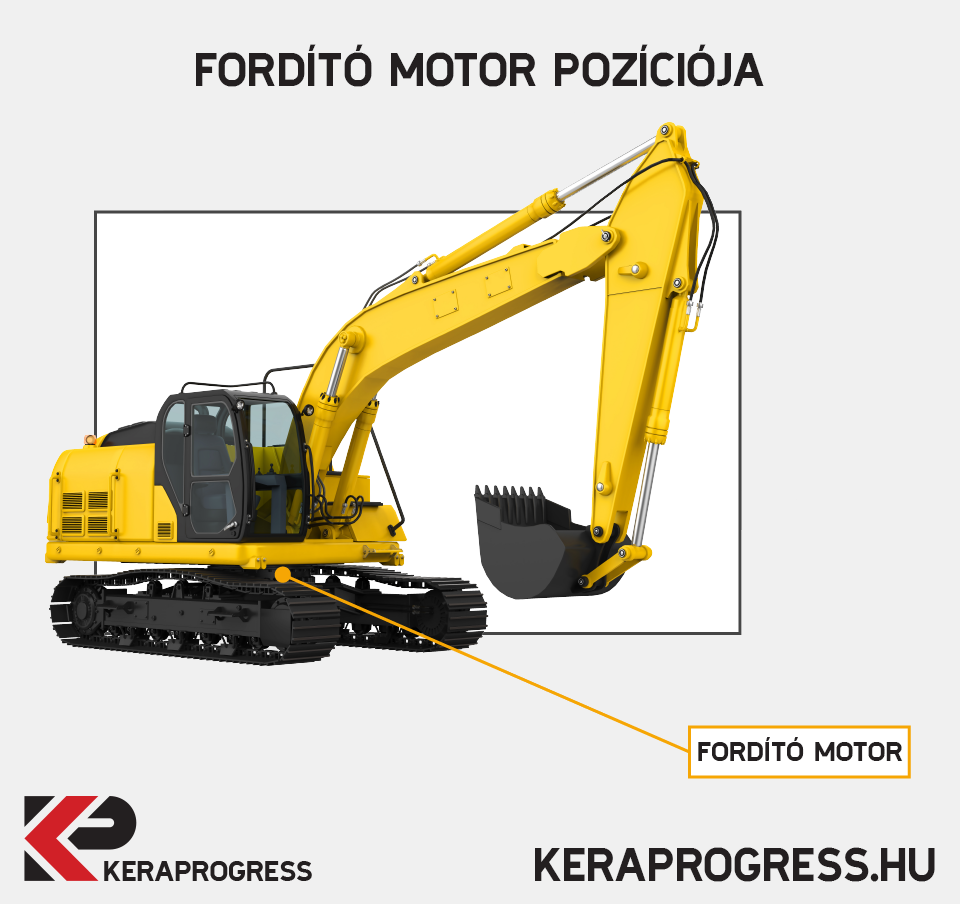
The swing motor is located in the center of the excavator and separates the upper rotating parts of the machine from the lower traveling parts. The swing drive allows the upper structure of the machine to rotate 360 degrees around its central axis.
Without the swing motor, the excavator’s upper structure and attachments would be fixed and immobile relative to the tracks, and the operator would have to reposition the entire machine to change the position of the excavator’s digging tools – which would significantly reduce the excavator’s unique advantages on the job site.
How does a swing motor work?
The essence of the swing motor (simply put) is that it allows movement of the excavator’s upper components, but the overall design must also ensure that the rotating motion is smooth, operates according to defined parameters, and can be finely controlled by the operator.
The internal hydraulic components and design of the swing motor use numerous valves, ports, and bearings so the operator can control the motor’s speed and direction, while also incorporating safety measures to prevent damage to the machine. Since the machine’s moving components are robust and often under load, the swing motor must be designed to withstand momentum changes and operation on uneven ground.
By opening and closing the hydraulic ports inside the swing motor (via the joystick in the cab), the operator can control the speed and direction of the internal components, and therefore the movement and position of all upper parts of the excavator.
At the bottom of the swing motor, the teeth of a pinion gear engage with the teeth of the ring gear in the excavator body – as the pinion rotates, the upper parts of the excavator rotate around the inside of the stationary swing drive.
How do you operate a swing motor?
Due to the unique design of excavators, the operator interface inside the excavator cab is complex and sophisticated. The travel motor introduces a new control axis into the machine, and with it an additional control system. Inside the operator’s cab there are pedals and levers for controlling the undercarriage, as well as two joysticks for controlling the boom, bucket, and swing mechanism of the machine – together with a range of intelligent controls, displays, and technical equipment.
An expert excavator operator is able to combine the movements of all parts of the excavator to perform complex and detailed actions and handle the surrounding environment skillfully. In the right hands, the excavator’s swing mechanism helps deliver fast and precise work across a wide variety of tasks.
What are the parts of a swing motor?
Swing motor The upper part of the swing motor is a hydraulic motor consisting of numerous valves, ports, and bearings that regulate how and when oil flows and drive the connected gearbox. The safety mechanisms inside the motor must take feedback from the machine into account and be designed to operate under intense pressure.
Gearbox The gearbox consists of multiple planetary gear systems, each designed to convert high-speed input energy into lower-speed, high-torque output power. High torque is necessary to swing the weight of the upper structure together with any load, and to ensure smooth movement and proper machine performance during operation.
Planetary gear Planetary gear systems consist of multiple planetary gears rotating around a central gear. Through gear reduction, they convert power into high-torque output.
Main shaft The gear shaft extends from the bottom of the swing motor and interacts directly with the ring gear in the excavator body. The interaction between the teeth of the pinion gear and the teeth of the ring gear rotates the swing motor and thereby rotates the excavator’s upper structure.
Ring gear Although it is not part of the swing motor itself, the ring gear is a component fixed to the excavator’s undercarriage into which the swing motor engages, guiding its movement and rotating the upper structure.
Although swing motors and excavators are fairly complex topics, hopefully this short article has helped reveal the basics and functions of swing motors.